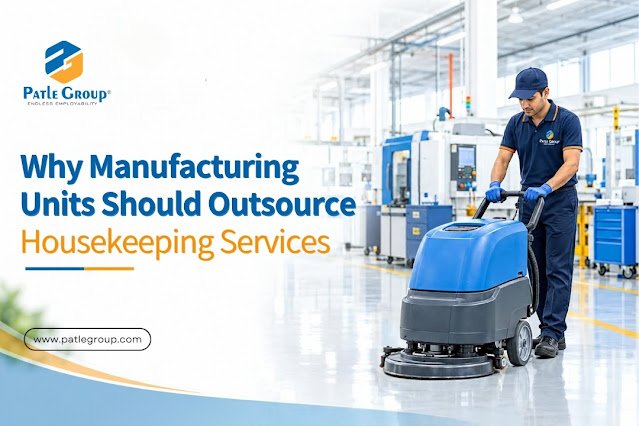
In a manufacturing unit, cleanliness is not just about keeping floors spotless or maintaining a presentable workplace. It directly affects how safely people work, how efficiently materials move, and how smoothly daily operations run. Dust accumulation, oil spills, metal scrap, blocked walkways, and poorly maintained work areas can create problems that go far beyond appearance.
Maintaining proper housekeeping across a factory requires planning, trained staff, suitable equipment, regular inspections, and consistent supervision. For many manufacturers, managing all these responsibilities internally can become difficult, especially when production schedules are demanding and workforce requirements keep changing.
This is why many businesses are considering outsourced housekeeping services. By working with a professional service provider, manufacturing units can establish structured cleaning routines, improve workplace conditions, and allow their internal teams to focus more closely on production and core business activities.
What Is Industrial Housekeeping?
Industrial housekeeping involves maintaining cleanliness, order, and safe working conditions throughout a manufacturing facility. It covers production floors, machinery surroundings, warehouses, storage areas, employee facilities, corridors, loading bays, and other operational spaces.
Unlike ordinary office cleaning, industrial housekeeping often involves dealing with grease, dust, industrial waste, packaging materials, and residues generated during production. Different areas may require different cleaning methods, equipment, schedules, and safety precautions.
A professional housekeeping team follows defined procedures to ensure that cleaning activities are completed without unnecessarily disturbing production.
For manufacturing units handling multiple shifts or operating large premises, working with a reliable housekeeping services company Nagpur can help establish a more organized approach to cleaning, workforce deployment, and service monitoring.
1. Maintain Cleanliness Without Distracting Production Teams
Manufacturing teams already have important responsibilities related to production targets, machinery, quality checks, material handling, and dispatch schedules. Asking internal employees to manage routine cleaning in addition to their primary duties can affect how their time is used.
Outsourcing housekeeping allows cleaning responsibilities to be assigned to a dedicated team. Cleaning schedules can be planned around production activity, shift changes, maintenance windows, and other operational requirements.
For example, high-traffic walkways may need frequent cleaning, while certain machinery areas may require cleaning only after an approved shutdown or maintenance activity.
A professional housekeeping team can follow an agreed schedule, helping maintain workplace standards without creating unnecessary interruptions to production.
2. Improve Workplace Safety Through Better Housekeeping
Poor housekeeping can create hazards that are easy to overlook during a busy production shift. Oil on the floor, loose cables, scattered packaging, accumulated dust, and obstructed emergency exits can increase the risk of slips, trips, falls, or other incidents. In some industrial environments, dust and waste may also create additional fire, contamination, or equipment-related risks.
Outsourced housekeeping teams can work according to site-specific cleaning procedures, inspection schedules, and waste-handling instructions. Staff should also know how to identify hazards and report issues that require maintenance or management intervention.
However, housekeeping alone cannot replace a complete workplace safety programme. Its value lies in supporting other safety measures through consistent cleaning, organized storage, and timely reporting.
3. Reduce the Burden of Recruiting and Managing Cleaning Staff
Hiring housekeeping workers internally involves more than finding people who can perform cleaning tasks. Businesses must also manage attendance, shift allocation, leave, replacements, training, supervision, and daily work assignments.
These responsibilities can consume time that HR and administrative teams could otherwise spend on higher-priority activities
When a company outsources housekeeping, the service provider takes responsibility for the agreed staffing and operational arrangements under the contract. This may include recruitment, deployment, attendance monitoring, replacement planning, and supervision, depending on the service agreement.
4. Control the Overall Cost of Housekeeping
The cost of in-house housekeeping is not limited to monthly salaries. Businesses may also need to account for recruitment, uniforms, training, supervision, cleaning materials, equipment, staff replacements, and administrative time.
Outsourcing gives businesses an opportunity to review these expenses under a defined service arrangement.
Depending on the size of the facility and the scope of work, a service provider may help organize manpower, consumables, equipment, and supervision more efficiently. The actual savings will depend on the existing arrangement, the agreed service levels, and the resources included in the contract.
Before making a decision, manufacturers should compare the total cost of managing housekeeping internally with the complete cost of the outsourced proposal.
A low quotation is not always the best choice if it excludes essential equipment, adequate staffing, or proper supervision.
5. Access Trained Staff and Suitable Cleaning Equipment
Different manufacturing environments require different cleaning methods. A general cleaning approach may not be suitable for a facility dealing with fine dust, lubricants, industrial residues, sensitive components, or specialized production equipment.
Professional housekeeping providers can help businesses plan the workforce, cleaning tools, machinery, and methods needed for the assigned areas.
Depending on the facility, this may involve industrial vacuum cleaners, floor-scrubbing machines, appropriate cleaning agents, spill-control materials, and other equipment selected for the task.
Staff must also understand which areas require restricted access, what protective equipment is necessary, and which cleaning methods are permitted near operating machinery.
Manufacturers should confirm whether equipment, consumables, protective gear, and specialist cleaning tasks are included in the contract before finalizing the service arrangement.
6. Maintain Consistent Cleaning Standards Across Shifts
A common challenge in manufacturing facilities is maintaining the same standard of cleanliness throughout the day.
An area may be clean during the morning shift but become cluttered after several hours of production. Waste can accumulate, walkways can become obstructed, and cleaning tasks may be missed during shift changes.
Outsourced housekeeping can help address this issue through defined work schedules, area-wise responsibilities, inspection checklists, and supervisory reviews.
For example, the housekeeping plan may specify how frequently production walkways must be checked, when waste containers should be cleared, and who is responsible for maintaining employee facilities.
Regular monitoring helps identify recurring problems and gives management a clearer picture of service performance.
7. Support Machinery Care and Workplace Organization
Dust, dirt, and residue around equipment can interfere with inspections and make it harder for maintenance teams to identify leaks, loose components, or other visible problems.
Routine cleaning helps keep machinery surroundings organized and makes certain maintenance tasks easier to carry out. It can also improve access to equipment and reduce unnecessary clutter around workstations.
Housekeeping staff should not interfere with operating machinery or perform technical cleaning beyond their training. Cleaning around equipment must follow the manufacturer's instructions and the plant's lockout, shutdown, and safety procedures wherever applicable.
When housekeeping teams coordinate with maintenance personnel, they can help keep work areas ready for inspections and scheduled maintenance activities.

8. Improve Waste Management and Material Handling Areas
Manufacturing operations generate different types of waste, including packaging, scrap, general waste, and process-specific residues. If these materials are not handled according to established procedures, they can occupy valuable space and interfere with movement.
A planned housekeeping service can help maintain designated waste collection points, clear approved areas, and keep material movement routes organized.
Industrial waste must be segregated, stored, handled, and disposed of according to its type and the applicable requirements. Hazardous or specialized waste should be managed only through the appropriate authorized procedures and personnel.
Effective housekeeping supports these processes by keeping designated areas orderly and reporting waste-handling problems promptly.
9. Make Housekeeping Scalable as Production Changes
Manufacturing requirements do not always remain constant. A plant may increase production, introduce another shift, expand its warehouse, begin a new project, or experience seasonal demand.
An internal housekeeping team can become difficult to scale when these changes happen quickly.
An outsourced arrangement may provide greater flexibility to revise deployment or cleaning schedules, subject to the contract and the service provider's capacity.
For example, a facility adding a production line may need additional cleaning coverage around new workstations and material movement routes. A professional provider can review the revised requirements and propose an updated service plan.
This flexibility is one reason businesses consider outsourcing when their operational needs are changing.
10. Allow Management to Focus on Core Business Activities
Factory managers and production teams need to concentrate on output, product quality, machinery performance, delivery commitments, and customer requirements. Managing every support activity internally can spread their attention across too many responsibilities. Outsourcing housekeeping creates a clearer division of work. The service provider manages the agreed cleaning operations, while the manufacturing company retains oversight of site requirements, safety expectations, and service performance.
This arrangement works best when both parties communicate regularly and follow documented procedures. Manufacturers should define reporting responsibilities, escalation processes, inspection standards, and corrective-action timelines from the beginning.
How to Choose the Right Housekeeping Service Provider
Not every housekeeping agency is equipped to handle an industrial facility. Before selecting a partner, manufacturing units should evaluate several important factors.
Industrial experience: Check whether the provider understands factory cleaning, shift-based operations, production-area requirements, and industrial safety practices.
Workforce management: Ask how attendance, training, replacement staff, and supervision will be handled.
Equipment and materials: Clarify what cleaning equipment, consumables, and protective gear are included.
Safety procedures: Confirm that cleaning activities will follow the plant's safety rules and approved methods.
Quality monitoring: Review the proposed inspection process, reporting format, and complaint-resolution system.
Transparent pricing: Ensure that staffing levels, working hours, scope of work, exclusions, and additional charges are clearly documented.
Scalability: Discuss how the service can respond to production changes, additional shifts, or facility expansion.
For businesses seeking an experienced outsourcing services company Nagpur, evaluating these factors can help identify a provider that understands operational requirements instead of offering a standard cleaning package.
Why Integrated Housekeeping Management Makes a Difference
Housekeeping often works alongside security, maintenance, manpower management, pest control, and other facility services. When these functions are planned separately without clear coordination, operational gaps can develop.
For instance, a cleaning team may need access to a restricted area, maintenance staff may require a clear work zone, or security personnel may need to control movement during cleaning operations.
An integrated service approach helps define responsibilities and improve communication between teams. It can also make supervision, issue reporting, and service reviews more organized.
For manufacturing businesses, the objective is not simply to outsource cleaning. It is to build a reliable process that supports safe, orderly, and efficient day-to-day operations.
Outsourcing housekeeping can help manufacturing units manage cleanliness, workplace organization, staffing, and routine facility responsibilities more systematically. It provides access to dedicated personnel and structured service processes while reducing the burden of managing every housekeeping activity internally.
The benefits depend on selecting the right service provider, defining the scope clearly, maintaining safety standards, and reviewing performance regularly. Outsourcing is not automatically cheaper or more effective in every situation, but a well-planned arrangement can offer meaningful operational advantages.
For businesses evaluating a housekeeping services in Nagpur, the right partner should understand industrial working conditions, workforce requirements, cleaning standards, and the importance of uninterrupted production.
With clearly defined responsibilities and dependable manpower outsourcing services, manufacturing units can create cleaner and better-organized workplaces while allowing their internal teams to concentrate on production, quality, and business growth.

Contact Patle Group :
Website : https://patlegroup.com/
Mobile Number : +91 7420888699
Address : Patle Group In front of Corporation School, Jaitala, Nagpur - 440036.