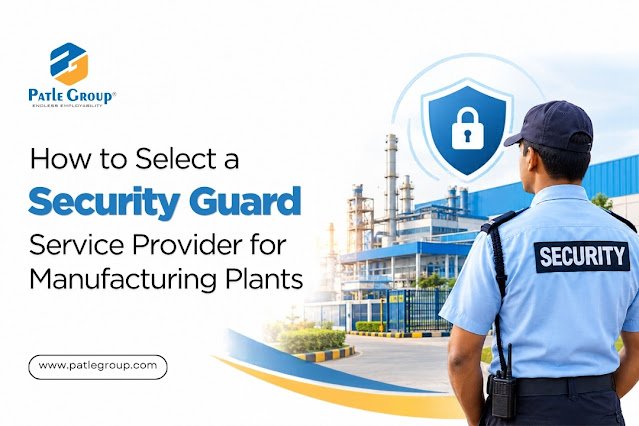
A manufacturing plant never truly stops managing risk. Even when production is running smoothly, raw materials are arriving, finished goods are moving, employees are changing shifts, contractors are entering the premises, and valuable machinery remains in operation. With so many activities happening simultaneously, security needs to be planned carefully rather than handled as a routine administrative task.
Selecting the right security guard service provider is therefore an important decision for manufacturing businesses. The right agency can help control unauthorized access, monitor material movement, protect company assets, and maintain discipline across the premises. However, choosing a provider based only on pricing or the number of guards available can leave important security gaps.
For manufacturers evaluating Security guard services Nagpur or other industrial locations, the key is to find a service provider that understands factory operations, workplace risks, manpower requirements, and the importance of consistent supervision.
Why Manufacturing Plants Need Specialized Security
Security requirements in a factory are different from those in a residential building or corporate office. Industrial premises may contain expensive equipment, high-value inventory, restricted production areas, hazardous materials, and multiple entry and exit points.
A security lapse can lead to material losses, unauthorized access, production interruptions, or safety concerns. In some situations, even a small failure in gate management or vehicle verification can create problems with inventory records and dispatch operations.
Manufacturing plants should therefore look for a security provider that understands how people, vehicles, materials, and operational schedules move through an industrial facility.
1. Evaluate the Agency's Industrial Experience
The first step is to understand whether the security agency has experience working in manufacturing environments.
A provider familiar with industrial premises is more likely to understand the importance of gate control, shift changes, vehicle movement, contractor entry, warehouse monitoring, and restricted-area management.
During the evaluation, ask the agency about its experience with facilities similar to yours. A small manufacturing unit may have different requirements from a large plant with multiple gates, warehouses, loading bays, and round-the-clock production.
Request details about its operating procedures, supervision arrangements, and ability to manage the specific challenges of your facility.
Practical tip: Explain your plant's operating hours, number of entry points, workforce size, vehicle movement, and high-risk areas before requesting a security proposal.
2. Check Guard Training and Professional Conduct
Security personnel are often the first people visitors, suppliers, drivers, and employees encounter at a manufacturing facility. Their conduct can influence both workplace discipline and the professional image of the organization.
Guards should receive appropriate training for their assigned duties, including access control, visitor verification, incident reporting, emergency procedures, communication, and site-specific security protocols.
For industrial deployment, they should also understand the importance of following safety instructions, wearing required protective equipment where applicable, and avoiding unauthorized entry into operational areas.
Ask the service provider how it recruits personnel, verifies their backgrounds, delivers training, and evaluates performance after deployment.
A trained guard who follows procedures consistently can be more effective than a larger team working without clear instructions.
3. Assess Gate Management and Access Control
The main gate is one of the most important security points in a manufacturing plant. Employees, transporters, vendors, contractors, and visitors may enter throughout the day, making a structured access-control process essential.
Before finalizing a provider, determine how it will manage:
Employee entry and exit
Visitor registration and authorization
Contractor verification
Vehicle entry and exit records
Delivery and dispatch documentation
Restricted-area access
Shift-change movement
Emergency entry procedures
The process should match the plant's operational requirements without creating unnecessary delays.
For example, a factory receiving multiple truckloads of raw material may need a clear vehicle verification and documentation procedure. A facility handling sensitive components may require additional access restrictions around inventory and production areas.
The service provider should be able to recommend practical procedures based on these requirements.
4. Understand Material Movement and Inventory Protection
In manufacturing, security is not limited to protecting buildings. It also involves monitoring the movement of raw materials, components, tools, scrap, finished products, and company equipment.
A suitable security agency should understand the plant's material movement procedures and follow authorized documentation and verification protocols.
This may include checking dispatch documents, maintaining vehicle registers, recording movement of approved materials, and escalating discrepancies to the designated company representative.
Security personnel should follow established company policies rather than making independent decisions about releasing goods or permitting exceptions.
Clear coordination between security, stores, dispatch, and plant management can help reduce confusion and strengthen accountability.
5. Verify Manpower Availability and Shift Planning
A security plan is only effective when the required personnel are available at the right time.
Manufacturing plants may operate during the day, at night, on weekends, or across multiple shifts. A service provider must be able to plan deployment according to these schedules and maintain appropriate arrangements for weekly offs, leave, and unexpected absences.
Ask the agency how it manages replacement staff, attendance, late reporting, emergency requirements, and supervisory coverage.
It is also important to establish the number of guards needed at each location. A plant with several gates and a large warehouse may require a different deployment model from a smaller facility with a single entrance.
Avoid finalizing a contract until the proposed staffing plan and responsibilities are clearly documented.

6. Review the Agency's Legal and Compliance Practices
Manufacturing businesses should verify that the security provider operates in accordance with applicable laws and regulatory requirements.
Depending on the location and scope of work, this may include checking the required security agency licence, where applicable, personnel verification records, employment documentation, training records, and relevant statutory compliance.
Businesses should also clarify responsibilities relating to wages, working hours, overtime, social security contributions where applicable, uniforms, and other employment obligations.
The applicable requirements may vary according to the nature of the engagement and current law. Companies should verify the relevant requirements before entering into an agreement.
Proper documentation reduces uncertainty and provides a clearer basis for managing the service relationship.
7. Evaluate Supervision and Reporting Systems
Hiring guards is only one part of professional security management. Their deployment, discipline, performance, and adherence to site procedures also need regular monitoring.
Ask how the agency supervises its personnel and how frequently supervisors visit the premises. Understand whether attendance records, shift handovers, inspection reports, and incident logs are maintained.
A reliable reporting process should make it easy for plant management to understand what happened, when it happened, what action was taken, and whether further attention is required.
For larger facilities, digital attendance systems, patrol monitoring, CCTV integration, and structured reporting may provide additional visibility.
The objective is not simply to record activities but to identify recurring problems and improve security procedures over time.
8. Consider Security Technology Alongside Human Guards
Technology can strengthen physical security when it is selected according to actual site requirements.
CCTV surveillance, electronic access control, visitor management software, alarm systems, and vehicle monitoring can support security personnel by improving visibility and recordkeeping.
However, technology should not be introduced without a clear purpose. A manufacturing plant should first identify its risks, determine which locations require monitoring, and establish who will respond when an alert occurs.
For example, CCTV may help identify unusual activity near a warehouse, while trained personnel can verify the situation and follow the appropriate escalation procedure.
A balanced approach combines trained people, reliable processes, and suitable technology rather than relying entirely on one of these elements.
9. Compare Service Quality, Not Just Cost
Security contracts should be evaluated on overall value rather than the lowest quotation.
A low-cost proposal may not adequately account for supervision, training, replacement arrangements, uniforms, statutory obligations, or the number of personnel needed to meet the agreed scope.
When comparing quotations, ask each provider to specify the proposed deployment, working hours, supervisory structure, responsibilities, exclusions, and billing terms.
Also clarify how additional deployment requests, public holidays, overtime, and emergency requirements will be handled.
A transparent quotation makes it easier to compare agencies fairly and reduces the likelihood of disputes after the contract begins.
10. Check References and Service Performance
Before making a final decision, ask for relevant client references where available. Speaking with businesses that have used the provider can offer useful insight into its operational reliability.
Focus on practical questions:
Does the agency maintain agreed staffing levels?
Are replacement guards arranged when required?
Does its supervisory team respond promptly?
Are incidents reported clearly?
Does the agency resolve complaints within agreed timelines?
Can it adapt when operational requirements change?
The answers can help you understand whether the provider is capable of maintaining consistent service after the initial deployment.
11. Integrate Security with Overall Facility Operations
Security does not operate in isolation. Manufacturing plants also depend on housekeeping, maintenance, waste management, landscaping, pest control, and other support functions.
When these activities are coordinated effectively, it becomes easier to manage access, report hazards, maintain clear movement routes, and address operational issues.
For example, a housekeeping team may identify a blocked emergency route, while security personnel help restrict access to an affected area until the issue is resolved.
This is one reason businesses consider integrated facility management services India providers when planning support operations across industrial premises.
When security and facility teams follow clearly defined procedures, coordination improves and responsibilities become easier to manage.
12. Establish Clear Performance Standards Before Signing
A professional security contract should define what the agency is expected to deliver and how its performance will be reviewed.
Depending on the facility, agreed performance measures may include:
Attendance and deployment compliance
Completion of scheduled patrols
Maintenance of visitor and vehicle records
Timely incident reporting
Completion of required inspections
Response to complaints
Compliance with site-specific procedures
These standards should be realistic, measurable, and relevant to the plant's risks.
Regular review meetings between the agency and plant management can help resolve concerns early, improve coordination, and keep the security arrangement aligned with changing operational needs.
How Patle Group Can Support Industrial Operations
Choosing a security partner requires an understanding of the wider workplace environment, not just the number of guards required at the gate.
Patle Group provides integrated facility management and workforce-related services, supporting organizations with requirements such as security, housekeeping, manpower solutions, and other operational support activities.
For manufacturing businesses, a coordinated service approach can help bring greater structure to everyday facility operations. Security deployment, housekeeping schedules, manpower coordination, and supervisory processes can be planned according to the facility's requirements.
Businesses evaluating security providers should discuss their site-specific needs, expected service levels, compliance requirements, and reporting expectations before selecting a suitable arrangement.
Selecting a security guard service provider for a manufacturing plant requires more than checking prices and staff availability. Businesses need to evaluate industrial experience, guard training, access-control procedures, material movement, shift planning, compliance, supervision, technology, and overall service reliability.
The right provider should understand the plant's operational risks and develop a security arrangement that supports both workplace safety and uninterrupted business activity.
For organizations exploring security guard services Nagpur, the most useful starting point is a detailed assessment of the facility, followed by a transparent comparison of qualified providers. When security is coordinated with industrial housekeeping services and broader facility operations, businesses can build a more organized and responsive workplace.

Ultimately, effective industrial security depends on the right people, clear procedures, consistent supervision, and a service partner that understands the importance of protecting employees, assets, and business continuity.
Contact Patle Group :
Website : https://patlegroup.com/
Mobile Number : +91 7420888699
Address : Patle Group In front of Corporation School, Jaitala, Nagpur - 440036.