
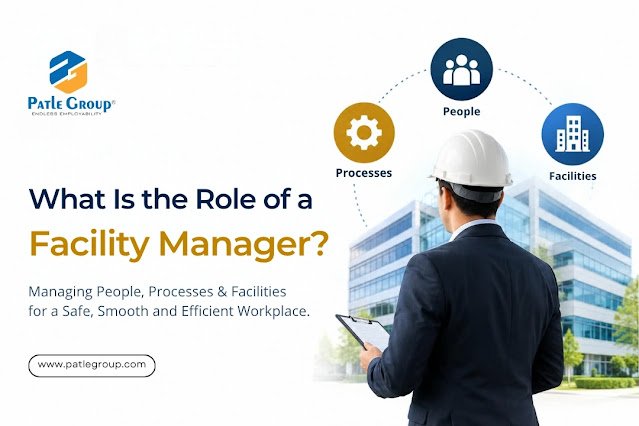
A well-run workplace does not happen by accident. Behind every clean office, properly maintained facility, secure entrance, organized workforce, and smoothly functioning workplace is a team responsible for coordinating multiple operational activities. One of the key people managing these responsibilities is the Facility Manager.
The role of a facility manager has changed significantly over the years. It is no longer limited to maintaining buildings or supervising housekeeping staff. Today, facility managers coordinate people, infrastructure, safety, maintenance, security, vendors, workplace services, and operational processes to ensure that an organization can function efficiently every day.
For businesses using professional facility management services India, the facility manager often becomes the central point of coordination between the organization, employees, service providers, and management.
What Is a Facility Manager?
A facility manager is a professional responsible for managing the day-to-day operations and physical environment of a workplace or property.
Their primary objective is simple: keep the workplace safe, functional, efficient, and comfortable while supporting the organization's operational goals.
Depending on the size and nature of the business, a facility manager may oversee housekeeping, security, maintenance, landscaping, pest control, utilities, workplace safety, vendor management, manpower, and other support services.
In a manufacturing facility, the responsibilities can be even more extensive because the manager may need to coordinate services around production schedules, industrial safety requirements, equipment areas, warehouses, employee facilities, and operational zones.
What Does a Facility Manager Do Every Day?
The daily responsibilities of a facility manager can vary considerably. One day may involve inspecting housekeeping standards, while another may involve coordinating maintenance work or resolving a security-related issue.
Some common responsibilities include:
1. Managing Housekeeping Operations
Cleanliness is an important part of workplace management. A facility manager ensures that cleaning schedules are followed and that offices, common areas, restrooms, production areas, and other spaces are maintained according to required standards.
The manager may also monitor the use of cleaning equipment and consumables, conduct inspections, and address service-related complaints.
For large industrial premises, professional housekeeping may require specialized processes and trained personnel. This is where structured facility management becomes particularly valuable.
2. Supervising Security Services
A facility manager may coordinate with the security team to ensure that access control, visitor management, gate operations, patrolling, and incident reporting are properly handled.
Security requirements vary from one organization to another. A corporate office may focus on visitor management, while a manufacturing plant may require vehicle checking, material movement control, perimeter patrols, and multiple security shifts.
The facility manager helps ensure that security procedures are implemented consistently.
3. Coordinating Maintenance
Buildings and workplace infrastructure require regular maintenance to remain functional.
Facility managers may coordinate electrical maintenance, plumbing, HVAC systems, lighting, water systems, fire safety equipment, elevators, generators, and other essential infrastructure.
Preventive maintenance is particularly important because identifying a problem early can prevent costly breakdowns and operational interruptions.
4. Managing Vendors and Service Providers
Many businesses work with external companies for housekeeping, security, pest control, landscaping, maintenance, manpower, and other services.
A facility manager acts as an important coordination point between these vendors and the organization.
Responsibilities may include checking service quality, reviewing attendance, monitoring agreed service levels, coordinating schedules, resolving issues, and ensuring that vendors meet contractual requirements.
Good vendor management can make a significant difference to service consistency.
Facility Managers and Manpower Management
People are at the centre of facility operations. Housekeeping staff, security personnel, technicians, supervisors, gardeners, maintenance workers, and other support employees may all work within the same facility.
A facility manager needs to ensure that the right number of people are available for each shift and that responsibilities are clearly assigned.
In some organizations, manpower requirements are supported through external agencies. A reliable manpower supply company Nagpur can help businesses source and deploy workers according to their operational requirements.
The facility manager can then focus on coordinating the deployed workforce, monitoring performance, and ensuring that service standards are maintained.
Ensuring Workplace Safety
Workplace safety is another important responsibility.
Facility managers help identify potential hazards such as blocked emergency exits, wet floors, damaged infrastructure, poor lighting, unsafe storage, or inadequate housekeeping.
They may also coordinate emergency drills, fire safety inspections, safety signage, access control, and maintenance of emergency equipment.
In industrial environments, safety coordination becomes even more important because employees may work around machinery, chemicals, electrical systems, heavy materials, or vehicle movement.
A proactive facility manager does not wait for an incident to happen. Regular inspections and preventive action can help reduce avoidable risks.
Managing Energy and Resource Consumption
Modern facility management also involves responsible use of resources.
Electricity, water, fuel, cleaning chemicals, paper, and other resources contribute to operating costs. Facility managers can help organizations identify areas where consumption can be reduced without affecting workplace performance.
Simple measures such as monitoring electricity usage, maintaining HVAC systems, repairing water leaks, using energy-efficient lighting, and controlling unnecessary equipment usage can contribute to long-term cost efficiency.
Sustainable facility management is becoming increasingly relevant as businesses pay greater attention to environmental responsibility.
Supporting Employee Productivity
The physical workplace can influence how employees work.
A clean office, comfortable temperature, reliable infrastructure, organized common areas, functional washrooms, and effective security create an environment where employees can focus on their primary responsibilities.
Facility managers therefore contribute indirectly to employee productivity by ensuring that workplace-related problems are identified and resolved efficiently.
When employees do not have to repeatedly deal with basic facility issues, they can concentrate more effectively on their actual roles.
Technology in Modern Facility Management
Technology is changing the way facility managers monitor and manage workplaces.
Depending on the organization, facility teams may use digital tools for:
-
Maintenance scheduling
-
Complaint management
-
Attendance monitoring
-
Asset tracking
-
Security monitoring
-
Energy management
-
Inspection checklists
-
Vendor performance tracking
-
Facility reporting
Digital systems can make it easier to identify recurring problems and maintain records of maintenance and service activities.
For larger organizations, technology also provides management with better visibility into facility performance.

Why Businesses Use Professional Facility Management Services
Managing every facility function internally can become complicated as a business grows.
A company may need separate teams for housekeeping, security, maintenance, landscaping, pest control, manpower, and other support activities. Coordinating all these functions internally requires considerable time and management resources.
Professional facility management services India can bring these activities together under structured operational management.
Instead of dealing with multiple operational issues independently, businesses can work with a professional facility management partner that manages services according to defined requirements and service standards.
This can help improve accountability, reduce administrative workload, and create greater consistency across the facility.
What Skills Does a Good Facility Manager Need?
Facility management requires a combination of technical, managerial, and communication skills.
A capable facility manager should understand:
-
Team management
-
Vendor coordination
-
Basic maintenance
-
Workplace safety
-
Housekeeping standards
-
Security procedures
-
Budget control
-
Documentation
-
Problem-solving
-
Communication
-
Emergency coordination
Perhaps most importantly, a facility manager needs to be able to identify problems before they become major operational issues.
The Strategic Role of a Facility Manager
The role of a facility manager is increasingly becoming strategic.
Instead of simply responding to complaints, modern facility managers are expected to monitor performance, identify inefficiencies, plan preventive maintenance, improve workplace standards, manage costs, and support business continuity.
This shift is especially important for large offices, manufacturing plants, warehouses, hospitals, educational institutions, and commercial properties where facility operations directly affect business performance.
Patle Group's Approach to Facility Management
Patle Group understands that effective facility management requires coordination across multiple services rather than treating each activity separately.
Its integrated approach can support businesses with housekeeping, security, manpower solutions, landscaping, pest control, outsourcing, staffing, and other facility-related requirements.
For organizations looking for professional facility management services India, an experienced service partner can help establish structured processes, trained manpower, supervision, and consistent service delivery.
Patle Group's focus is on creating workplace environments that are organized, safe, well-maintained, and operationally efficient.
Conclusion
A facility manager is much more than the person responsible for maintaining a building. The role connects people, infrastructure, safety, security, housekeeping, maintenance, vendors, and workplace operations.
By keeping these functions coordinated, facility managers help organizations reduce disruptions, control operational issues, improve workplace safety, and create a better environment for employees and visitors.
As businesses become more complex, the importance of professional facility management continues to grow. Whether an organization manages a corporate office, manufacturing plant, warehouse, campus, or commercial property, effective facility management can make everyday operations more organized and efficient.
For businesses seeking structured facility management services in Nagpur, partnering with an experienced provider such as Patle Group can provide access to integrated operational support while allowing management teams to focus on their core business activities.

Contact Patle Group :
Website : https://patlegroup.com/
Mobile Number : +91 7420888699
Address : Patle Group In front of Corporation School, Jaitala, Nagpur - 440036.