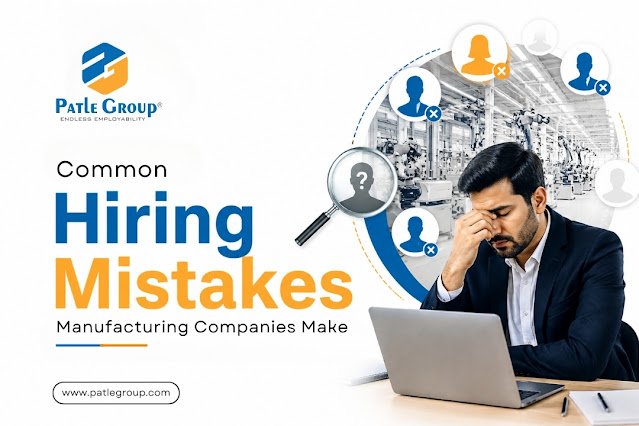
Hiring the right workforce is one of the most important responsibilities for any manufacturing company. Production targets, quality standards, delivery schedules, and workplace safety all depend on having reliable people in the right roles. However, manufacturing hiring is not always as simple as filling vacancies. A rushed recruitment decision or an unsuitable worker can affect productivity, increase employee turnover, and create unnecessary operational pressure.
For this reason, many manufacturers are now exploring manpower outsourcing services in Nagpur to make hiring more structured, flexible, and efficient. A professional workforce partner can help companies identify suitable candidates, manage documentation, and support manpower requirements according to production needs. But before choosing an outsourcing model, it is important to understand the common hiring mistakes that manufacturing companies should avoid.
Hiring Only When There Is an Urgent Vacancy
One of the most common mistakes is waiting until a position becomes vacant before starting the hiring process. In a manufacturing environment, an unexpected resignation or increase in production can create an immediate manpower shortage.
When hiring is done under pressure, companies may compromise on experience, skills, or candidate verification simply to fill the position quickly.
A better approach is to maintain a workforce plan based on production schedules, expected expansion, seasonal demand, and employee turnover. Working with an experienced industrial manpower supplier can also help manufacturers maintain access to suitable candidates when additional workers are required.
Focusing Only on Previous Experience
Experience is important, but it should not be the only factor considered during manufacturing recruitment. A candidate may have years of experience but still lack the discipline, adaptability, safety awareness, or technical understanding required for a particular production environment.
Manufacturers should evaluate candidates based on multiple factors, including technical skills, ability to follow instructions, workplace behavior, safety awareness, physical requirements of the role, and willingness to learn.
The right employee is not always the person with the longest resume. It is often the person whose skills and attitude match the actual requirements of the job.
Not Defining the Job Role Clearly
Unclear job descriptions can result in hiring the wrong candidates. Manufacturing roles often involve specific responsibilities related to machinery, production processes, quality control, material handling, maintenance, or warehouse operations.
Before beginning recruitment, businesses should clearly define the job title, responsibilities, required qualifications, experience, shift requirements, reporting structure, and expected performance.
A detailed job requirement also helps an outsourcing services company Nagpur identify candidates who are genuinely suitable for the position instead of simply sending a large number of resumes.
Ignoring Safety Awareness During Hiring
Safety should never be treated as a secondary consideration in manufacturing recruitment. Employees may work around heavy machinery, electrical systems, chemicals, moving equipment, elevated platforms, or industrial vehicles.
A candidate who lacks basic safety awareness can create risks for themselves and others.
Manufacturing companies should therefore evaluate a candidate's understanding of workplace safety and provide appropriate training before deployment. Safety orientation, PPE awareness, emergency procedures, and safe operating practices should be part of the onboarding process.
A reliable manpower partner can support this process by helping businesses deploy workers who understand the importance of workplace discipline and safety.
Selecting Candidates Based Only on the Lowest Cost
Cost is naturally an important consideration for every business, but choosing workers solely because they are available at the lowest cost can create long-term problems.
An inexperienced or unsuitable worker may require additional supervision, training, and replacement. Poor performance can also affect production quality and delivery schedules.
Manufacturers should look at the overall value of the workforce rather than focusing only on the initial hiring cost. A reliable employee who performs consistently can provide much greater value than a low-cost worker who frequently leaves or requires constant supervision.
Neglecting Background and Document Verification
Manufacturing companies handle sensitive equipment, materials, inventory, and sometimes valuable products. Therefore, proper employee verification is essential.
Before deployment, businesses should ensure that employee identity documents, qualifications, previous employment details, and other required records are properly verified.
Professional manpower outsourcing services in Nagpur can help businesses establish a structured documentation and verification process, reducing the risks associated with incomplete or inaccurate employee information.
.png)
Underestimating Employee Retention
Hiring employees is only one part of workforce management. Retaining capable workers is equally important.
High employee turnover creates repeated recruitment and training costs. It can also affect production continuity because new employees require time to understand processes, equipment, safety procedures, and workplace expectations.
Manufacturers should therefore consider factors such as fair compensation, workplace conditions, shift management, communication, training, and opportunities for skill development.
A stable workforce allows teams to become more experienced and efficient over time.
Failing to Plan for Seasonal or Project-Based Requirements
Manufacturing demand does not always remain constant. Production may increase during peak seasons, new contracts may require additional workers, or a temporary project may require a larger workforce.
Hiring permanent employees for every temporary increase can create unnecessary long-term costs. This is where contract staffing and manpower outsourcing can provide flexibility.
An experienced industrial manpower supplier can help businesses increase workforce strength when demand rises and adjust staffing according to operational requirements.
Poor Coordination Between HR and Production Teams
Recruitment should not be handled by HR alone. Production managers understand the practical requirements of manufacturing roles, while HR teams understand recruitment, documentation, and employee management.
When these departments do not communicate effectively, candidates may be hired who meet basic qualifications but are not suitable for actual production requirements.
Regular communication between HR, production, safety, and management teams creates a more accurate hiring process.
Choosing a Manpower Partner Without Proper Evaluation
If a company decides to outsource its workforce requirements, selecting the right service provider becomes equally important.
Before partnering with an outsourcing services company Nagpur, businesses should evaluate its industry experience, recruitment process, employee verification system, statutory compliance practices, workforce availability, replacement policy, and client support.
The right manpower partner should understand manufacturing environments rather than simply supplying workers. It should be capable of responding to changing workforce requirements and maintaining consistent service standards.
How Professional Manpower Outsourcing Can Help
Professional manpower outsourcing can simplify several aspects of manufacturing recruitment. Instead of managing every stage internally, companies can work with an experienced service provider for candidate sourcing, screening, documentation, deployment, attendance management, payroll coordination, and workforce support.
This allows internal HR teams to concentrate on employee engagement, training, performance management, and strategic workforce planning.
For manufacturing companies with fluctuating manpower requirements, outsourcing can also provide the flexibility to scale teams according to production needs.
Building a Smarter Manufacturing Workforce
Hiring mistakes are not always caused by a lack of candidates. Often, they happen because companies do not have a structured workforce strategy.
Manufacturers can improve recruitment outcomes by defining job roles clearly, assessing technical and behavioral skills, prioritizing safety, verifying candidates, planning manpower requirements in advance, and monitoring employee performance after deployment.
A professional manpower partner can further strengthen this process by providing access to a wider talent pool and organized workforce management.
The quality of a manufacturing workforce directly influences production efficiency, workplace safety, product quality, and business growth. Avoiding common hiring mistakes can help companies reduce employee turnover, improve productivity, and maintain operational continuity.
For businesses that need flexible and reliable workforce support, professional manpower outsourcing services in Nagpur can provide an effective alternative to managing every recruitment activity internally. By partnering with an experienced industrial manpower supplier or a reliable outsourcing services company Nagpur, manufacturers can access suitable manpower while reducing the administrative burden associated with workforce management.
The goal should not simply be to hire more people. It should be to build the right workforce—people who have the required skills, understand workplace expectations, follow safety practices, and contribute to the long-term success of the manufacturing operation.

Contact Patle Group :
Website : https://patlegroup.com/
Mobile Number : +91 7420888699
Address : Patle Group In front of Corporation School, Jaitala, Nagpur - 440036